
Introduction
In furniture and joinery projects, the devil is in the detail. Whether you're an interior designer, workshop fabricator, industrial manufacturer, or contractor, precise documentation eliminates guesswork and ensures accurate execution.
This blog covers practical detailing standards every team should use.
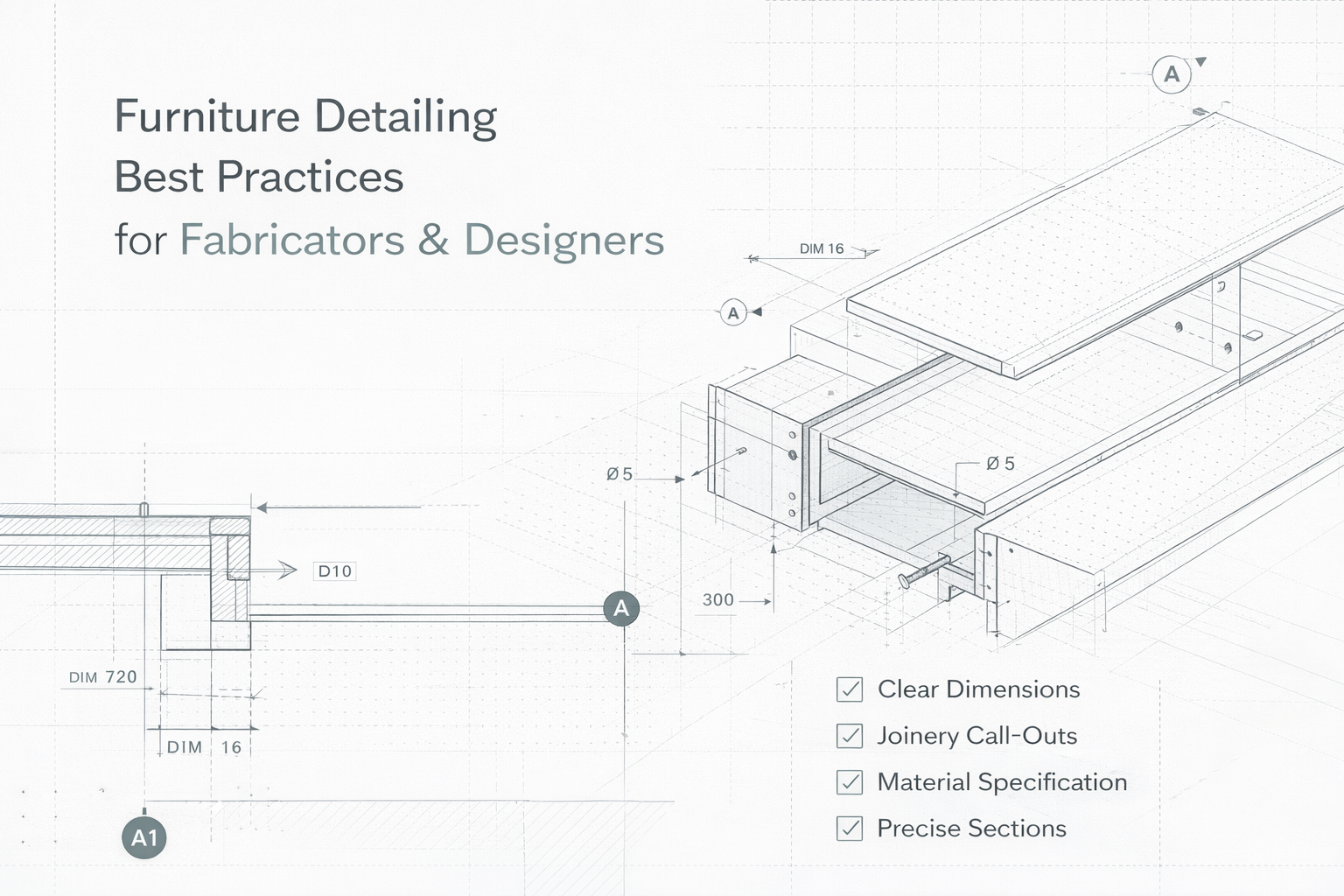
1. Dimension Chains Should Tell a Story
Good dimensioning includes:
- Overall size
- Critical clearances
- Material allowances
Clear dimension chains reduce workshop questions and rework.
2. Joinery Callouts Are Essential
Callouts should define:
- Type of joinery
- Hardware references
- Tolerance requirements
This helps fabricators choose the correct tools and methods.
3. Material Schedule and Specification
Document:
- Material types
- Finishes (colors & textures)
- Edge profiles
- Hardware references
This ensures consistency and quality control.
4. Section Views Where Needed
Sections show details that elevations can't:
- Hidden connections
- Internal supports
- Shelf brackets
Use them generously for clarity.
Conclusion
Great furniture detailing ensures fabrication efficiency, reduces installation delays, and delivers quality that matches design intent.
Expert Furniture Detailing Services
Our team specializes in precision furniture detailing that fabricators love. We understand joinery, materials, and fabrication tolerances—ensuring every detail is production-ready.
Learn how detailed CAD documentation reduces construction errors and improves project outcomes.
Ready to detail your furniture project? Check out our CAD and documentation services.