
Introduction
Effective documentation is more than just drawings — it is a risk management strategy that minimizes uncertainty on site, prevents costly errors, and aligns interdisciplinary teams.
For contractors, engineers, designers, and manufacturers alike, documentation serves as a trustworthy source of truth throughout the project lifecycle.
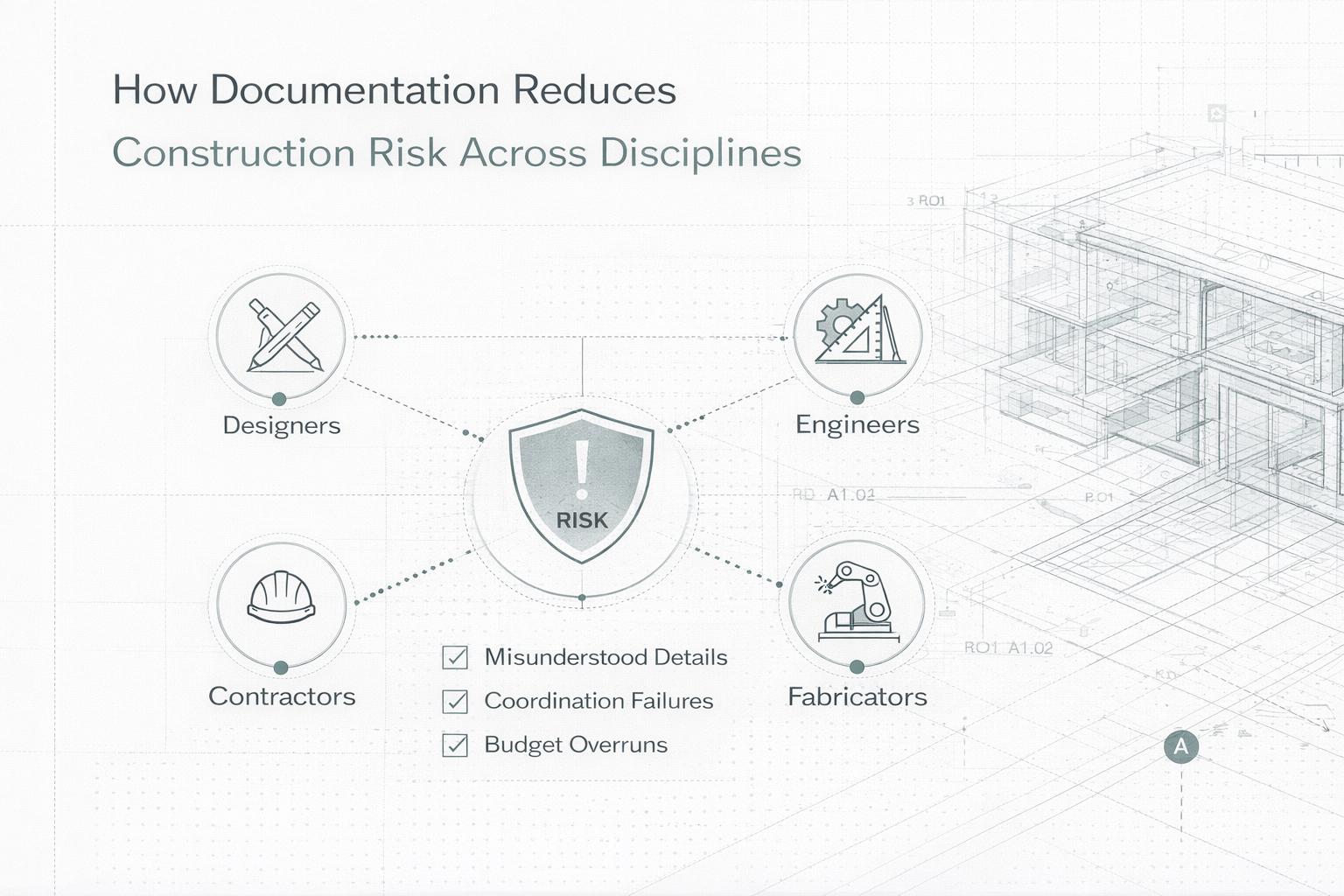
Why Risk Arises Without Documentation
When a project lacks clear documentation, teams encounter:
- On-site ambiguity
- Misunderstood details
- Conflicting instructions
- Unexpected rework
- Budget overruns
Whether you’re building a structure, fabricating components, or installing intricate joinery, predictable results depend on clarity — not guesswork.
Key Risks Documentation Helps Mitigate
1. Misinterpretation of Design Intent
Poor documentation leads to:
- Incorrect installations
- Mistakes in material selection
- Mismatch between design and build
Documentation reinforces the intent behind the design with precise specifications.
2. Coordination Failures
When teams work in silos:
- Structural plans don’t align with MEP systems
- Hardscape clashes with utilities
- Furniture details don’t fit in field conditions
Cross-discipline coordination documentation bridges these gaps and prevents conflicts.
3. Schedule Delays
Unclear drawings slow projects through:
- Requests for clarification
- Redesign cycles
- Audit checks
Good documentation anticipates questions before they arise — saving weeks on site.
The Contractor’s Perspective
Contractors rely on documentation to:
- Scope work accurately
- Bid confidently
- Sequence trades
- Maintain quality control
When documentation is precise, contractors can deliver on time, improve profitability, and avoid contract disputes.
From Fabricator to Field
For fabricators and manufacturers:
- Drawing clarity improves production quality
- Tolerance details prevent rework
- Assembly instructions speed installation
Documentation becomes the bridge between workshop and construction site.
Conclusion
Documentation doesn’t just communicate — it protects the project. When teams invest in detailed, coordinated documentation early, they reduce risk, save cost, and accelerate delivery.
Expert Coordination & Documentation
Our team specializes in detailed, risk-reducing documentation that keeps projects on schedule and within budget.
Learn how BIM leverages coordinated documentation across teams. Explore our CAD, BIM, and MEP coordination services.
Ready to reduce project risk? Let’s create clear, coordinated documentation for your next project.