
Introduction
Documentation is no longer an afterthought — it’s a strategic tool that connects design intent with execution accuracy.
In 2026, detailed CAD documentation has become essential across industries. Whether you're a designer, structural engineer, interior specialist, fabricator, contractor, or real estate developer, good documentation drives better outcomes.
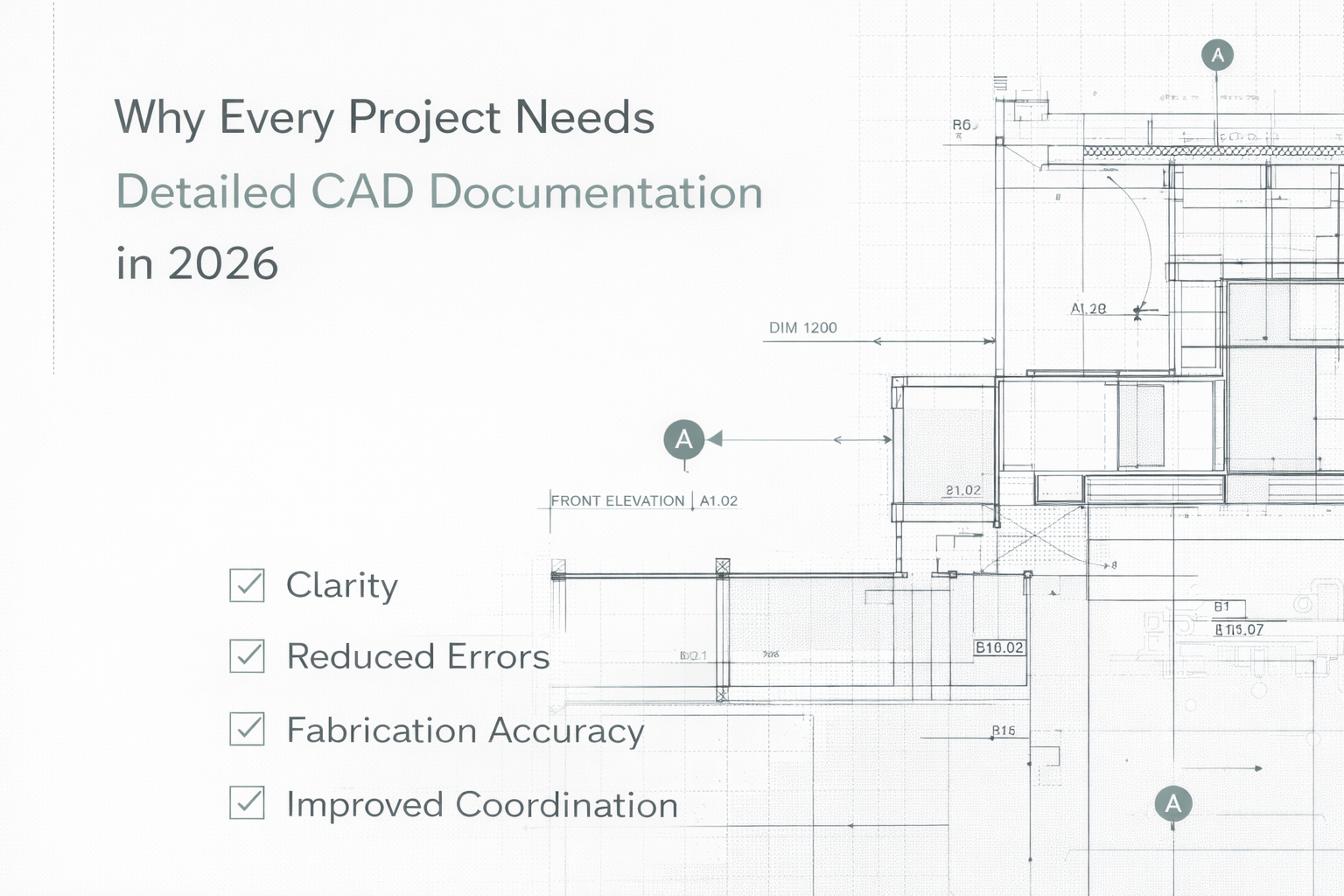
Why CAD Documentation Matters
Detailed CAD documentation ensures that:
- Designers’ intent is preserved through execution
- Fabricators can produce components accurately
- Contractors can install without ambiguity
- Engineers can coordinate across disciplines
- Clients get what they envisioned
This level of clarity prevents costly mistakes and improves project delivery speed.
Key Benefits of Precision Drafting
1. Clear Communication Across Teams
When drawings are clear and consistent:
- Teams understand each other
- Fewer misinterpretations occur
- Contractors spend less time asking questions
Good documentation eliminates guesswork — and saves project hours.
2. Reduced Rework and Errors
Poor documentation is one of the biggest causes of rework on site.
By ensuring:
- Correct dimensions
- Proper annotation
- Consistent detail levels
you reduce clashes, incorrect installations, and material waste.
3. Better Fabrication Output
For manufacturers and fabricators:
- Dimensions must be exact
- Joinery details must be clear
- Tolerances must be documented
These details save workshop time and reduce cost overruns.
How CAD Documentation Enhances Coordination
Documented drawings become a shared reference for:
- Architecture
- Structure
- MEP
- Interior fit-out
This alignment avoids clashes and improves interdisciplinary coordination.
Conclusion
CAD documentation is not optional — it’s a cornerstone of modern execution excellence. When teams speak clearly through drawings, projects run smoother, faster, and with fewer surprises.
Get Professional CAD Documentation
Our team specializes in detailed, production-ready CAD documentation that fabricators and contractors love. From furniture detailing to construction documentation, we ensure clarity and accuracy.
Explore our CAD drafting and documentation services. Learn more about furniture detailing best practices and BIM vs CAD workflows.
Ready to improve your project documentation? Let’s work together.