
Introduction
Landscape planning requires clear documentation — from topography to planting plans, irrigation layout, and hardscape coordination. Unfortunately, many landscape drawings fall short in clarity, leading to site rework and confusion.
This blog explores the top 10 landscape drafting mistakes — and how to avoid them.
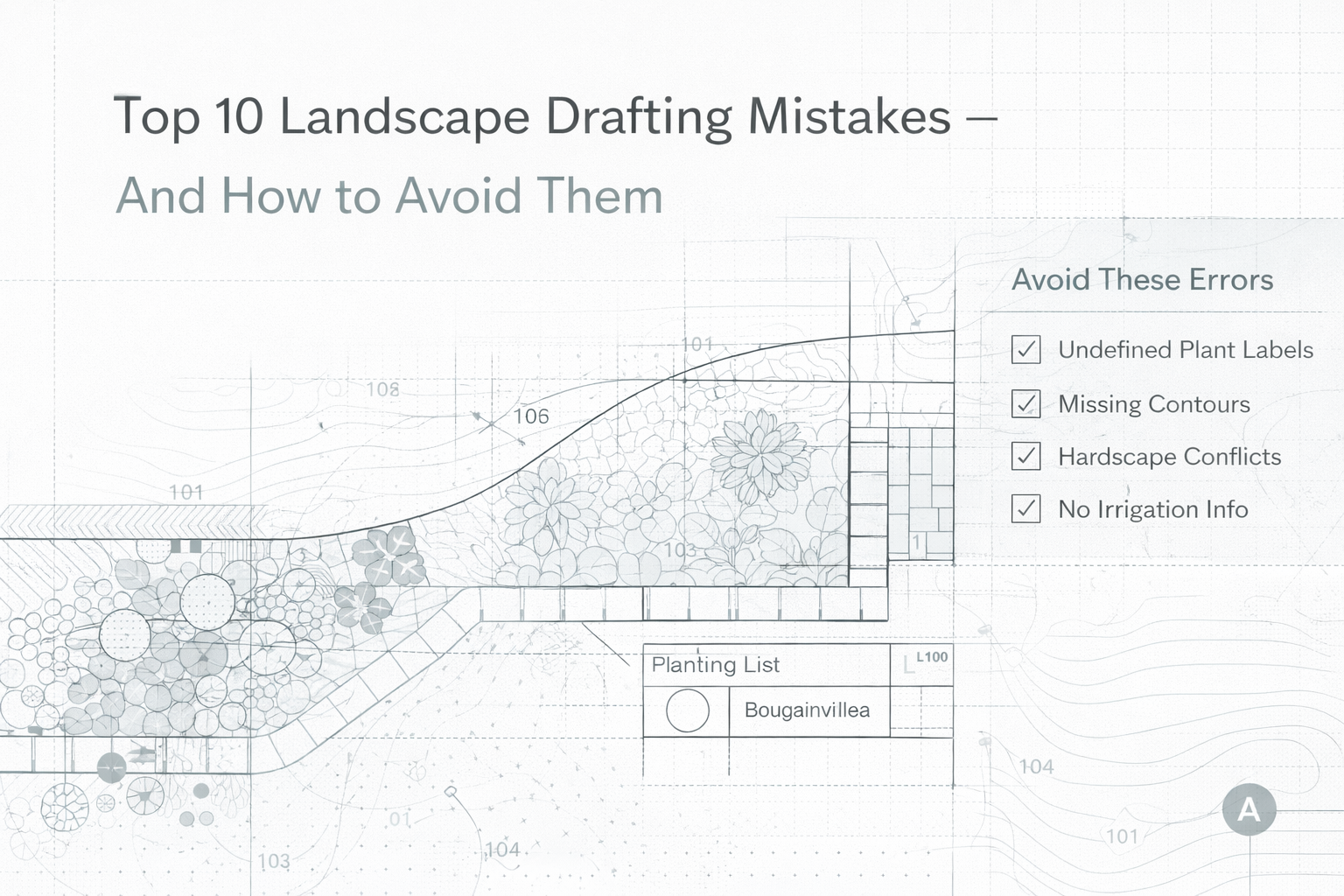
1. Ignoring Topographic Detail
Topography affects:
- Drainage
- Plant growth patterns
- Pathway usability
Without contour lines and level annotations, contractors cannot properly grade the site.
Fix: Include contour maps with spot levels and slope annotations.
2. Missing Plant Species Labels
Simply drawing plant icons is not enough. Each species needs:
- Botanical name
- Quantity
- Spacing guidelines
This helps installers and ensures long-term growth success.
3. Hardscape and Softscape Misalignment
Landscape and hard elements must reference each other.
Fix: Provide detailed offsets and edge condition callouts.
4. No Irrigation Coordination
Plants need water — and irrigation routes must be documented clearly.
Fix: Add zones, valve positions, and pipe routing.
Remaining Mistakes to Avoid
- No legend or key
- Missing scale references
- Poor layer organization
- Uncoordinated drainage symbols
- No coordination with utilities
Conclusion
Good landscape documentation prevents confusion and protects design intent through installation.
Professional Landscape Drafting Support
Need detailed landscape drawings that are fabrication-ready and coordinate with architectural and engineering plans? Our CAD drafting services include specialized landscape documentation.
Learn more about furniture detailing best practices and how precision documentation prevents construction errors.
Ready to improve your landscape documentation? Contact our team for professional, coordinated landscape drafting.