
Introduction
Building Information Modeling (BIM) is rapidly transforming the way architects, engineers, and consultants collaborate. What started as a 3D modeling tool has evolved into a central decision-making platform for design, coordination, and delivery.
BIM is no longer optional—it is a baseline expectation across projects of all scales.
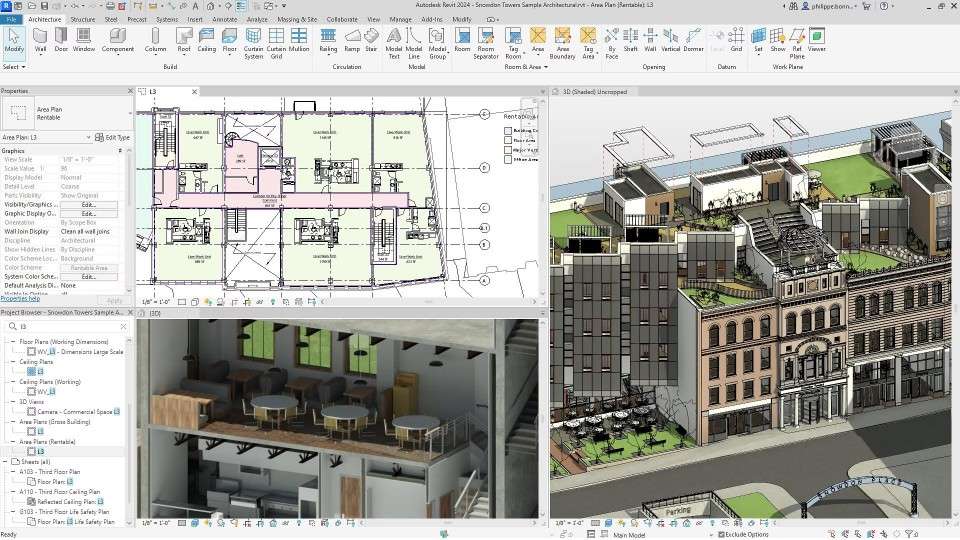
Why BIM Matters More Than Ever
BIM enables teams to move beyond disconnected drawings and towards integrated project intelligence.
Key benefits include:
- Improved coordination between disciplines
- Reduced errors and clashes during construction
- Better cost and quantity control
- Faster design iterations
- Clearer communication with clients and stakeholders
Good BIM is not about complex models—it’s about clarity, coordination, and confidence in decision-making.
The BIM Practices That Actually Change Documentation
1. Higher Focus on Coordination and Clash Detection
BIM workflows are increasingly centered around early-stage coordination, especially between:
- Architecture
- Structure
- MEP systems
Early clash detection significantly reduces:
- RFIs
- Site rework
- Project delays
2. LOD-Based Modeling Becoming Standard
Level of Development (LOD) is now being clearly defined at each project stage:
| Project Stage | Typical LOD |
|---|---|
| Concept Design | LOD 100–200 |
| Design Development | LOD 300 |
| Construction Documentation | LOD 350–400 |
| As-Built / FM | LOD 500 |
Clear LOD expectations improve accountability and reduce over-modeling.
3. BIM + Documentation Integration
Rather than treating BIM and documentation as separate processes, firms are aligning them into a single workflow.
This allows:
- Automated drawing generation
- Consistent detail coordination
- Faster revisions
Learn more about leveraging BIM for comprehensive documentation.
One coordinated model → Multiple reliable outputs
Embracing BIM for Better Projects
BIM is reshaping how architecture gets done. The firms that master BIM workflows early will have a competitive advantage in coordinated, efficient, and quality-driven deliverables.
Ready to optimize your BIM process? Check out our BIM modeling and coordination services to see how we can help.